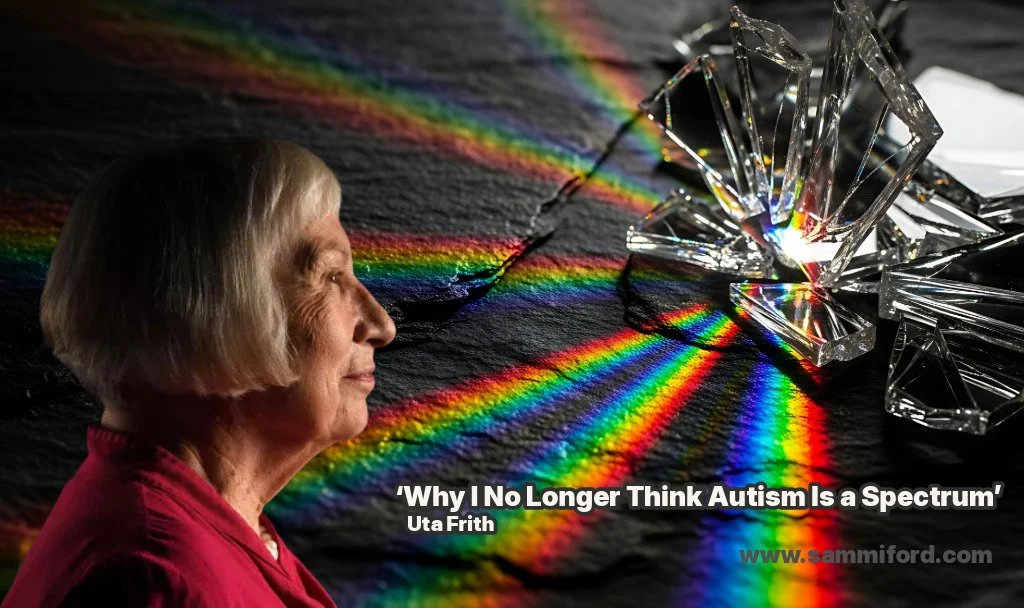
Uta Frith has spoken out about her opinion that the autistic spectrum theory is broken
In her TES article, ‘Why I No Longer Think Autism Is a Spectrum’, Uta Frith argues that autism’s spectrum of diagnostic criteria has become too accommodating and now comes to its collapse, understandably infuriating many of those who consider themselves to be on that spectrum, and sparking much controversy within the scientific and neurodivergent communities.
At first glance, it’s dismissive. Especially when Frith goes on to discuss ‘problems that can perhaps be treated much better than under the label of “autism”’ and suggesting ‘I would fight for that label to be limited.’
However, reading deeper, Frith is making some valid points that align with my own values. Maybe, the issue is not in opinion, but timing, and the unfortunate fact that her points will be used as ammunition to support the rhetoric being aired about overdiagnosis which we are seeing much too often nowadays.
Read the full article on Substack for more, such as:
"a physically disabled person may need a walking stick. Just because mental challenges are invisible, this does not negate the need for aids and allowances, hence the popularity of the Hidden Disabilities Sunflower lanyard. To overcome stigma, many neurodivergent people will attempt to behave normally to reflect their physical appearance and not appear odd, but under the skin, they are limping without a walking stick and being expected to keep up."
"Frith contradicts herself though by saying that ‘the spectrum has collapsed, but we might still find meaningful subgroups, each with its own label’, followed by, ‘there are massive reasons to believe that autism is a genetically caused disorder. However, it’s not one gene or two genes; it’s hundreds. That’s the difficulty. And all those genes work together in the context of your environment.’"
"This is what I have been arguing passionately for a long time now. Neurodivergent people cannot be placed on a global linear scale from 1 to 10. Our difficulties are much more nuanced."