Neurodiversity and Military Hierarchy: Thriving as a Neurodivergent RAF Officer
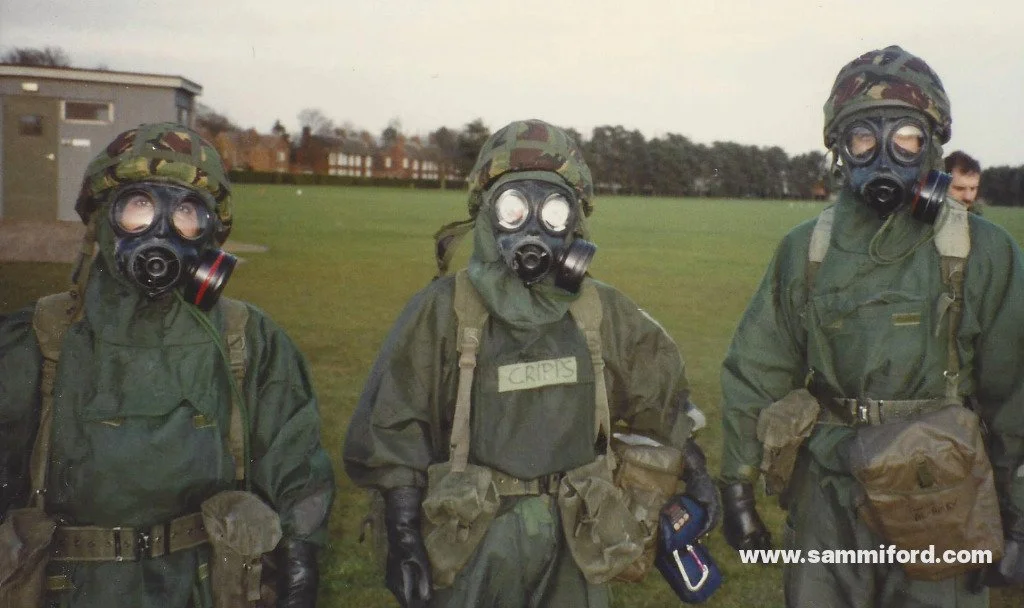
I am in the middle wearing a gas mask - not autistic masking, but not far short
Neurodiversity and the military are not often spoken about in the same sentence. When people discover that I am autistic and ADHD, as well as a former officer in the Royal Air Force, they usually ask the same question: how did I cope in such a rigid, rank-based system?
It’s assumed that hierarchy must be intolerable for neurodivergent people, but the reality is far more nuanced.
Many neurodivergent (ND) individuals, particularly autistic people, struggle with traditional hierarchies because we tend not to see what makes people beyond equal. A title alone does not automatically earn respect, especially if the behaviour behind it lacks fairness or integrity. Neurodivergent thinking is often logical, black-and-white, and deeply justice oriented. We question inconsistency. We struggle with “because I said so.” We value fairness over status.
At 16, I gained sponsorship. At 19, I was flying aircraft. I later became an officer in the Royal Air Force at a time when women were still not widely viewed as equals, either in the military or in society. On paper, it seems contradictory that someone who questions hierarchy would thrive in one of the most hierarchical institutions imaginable.
Paradoxically, the structure helped me.
Ironically, leaving the military during pregnancy was far harder than serving. Like many veterans, I struggled with the loss of structure and identity. Charities such as Walking with the Wounded played a crucial role in supporting me through a later mental health crisis and fast-tracking my neurodivergent diagnosis. The scaffolding that once held me steady had disappeared, and I had to rebuild it differently.
Read the article and subscribe here: