The Autistic Barbie: Representation, Responsibility, and the Problem of “One Size Fits All”.
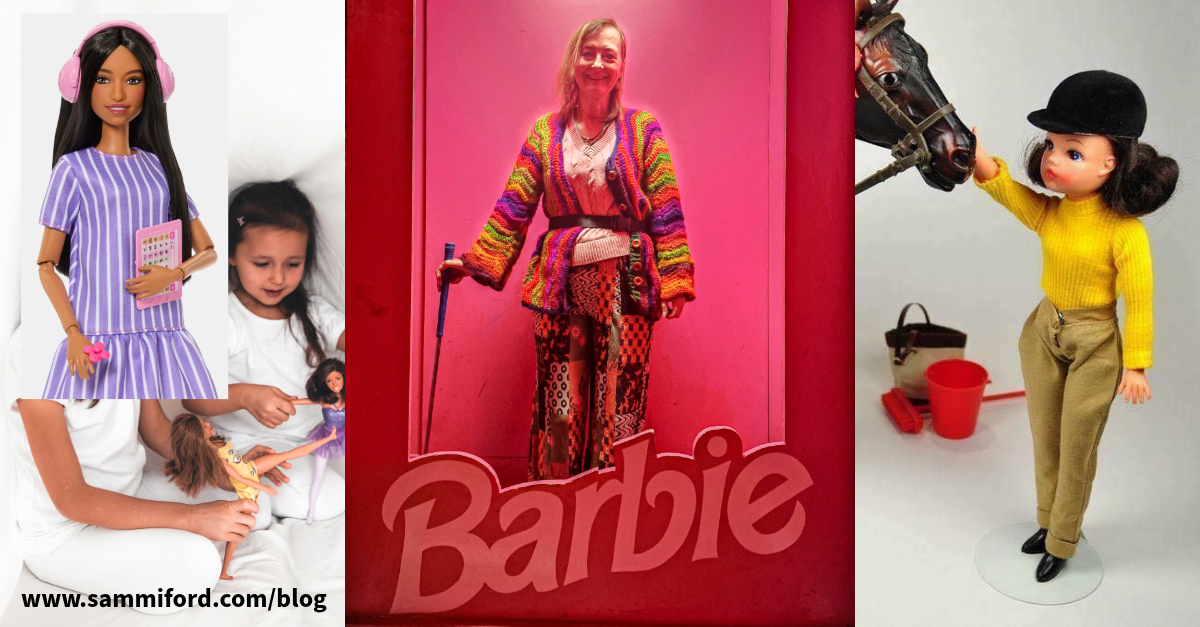
The Autistic Barbie Doll by Mattell
Mattel’s 2025 release of an autistic Barbie doll has been widely celebrated as a milestone for inclusion. A global brand, a mainstream toy, and a condition that has long lived somewhere between stigma, misunderstanding, and silence. On the surface, it feels like progress.
But as with most things involving autism and neurodivergence, the reality is more complicated.
Let’s chat about Barbie, Sindy, and who gets to be “normal”.
I didn’t have a Barbie growing up in the 70s. I didn’t identify with her, and frankly, she felt too American. Instead, I had Sindy: rounder-faced, British, and at one point famously accompanied by a very British horse and riding gear. Sindy felt closer to real life. Barbie, on the other hand, was pink, polished, and eventually ubiquitous.
Whatever it is, the way you tell your story online can make all the difference.
Unfortunately for me, Sindy disappeared into the ether; crushed by Barbie’s global dominance (as the BBC once documented rather brutally). Barbie’s dream houses grew larger and plusher, while Sindy quietly exited the cultural stage.
Alongside Sindy, I also had an Action Man - with army clothes, shaved head, and a scar on his cheek. Action Man and Sindy regularly had scraps - gender norms, even then, were negotiable to me. Unbeknown to me at the time, I would go on to join the Royal Air Force and have spent much of my professional life within male-dominated environments.
All this matters in the bigger picture because toys are never neutral. They tell children who belongs, who is aspirational, who is “normal”. Reinforcing the insecurity that if you don’t impress others, you don’t fit with trends and what society wants from you – you fail to “sell”. You will be replaced by the socially fitting alternative with a bouncy ponytail and a cute mini skirt.
Which brings us back to the autistic Barbie.
What Makes a Doll “Autistic”?
Mattel’s new release is identified as autistic largely through accessories: ear defenders, sensory tools, predictable routines. That raises an immediate question: does autism live in the person, or in the supports around them?
Representation is important to raise awareness of neurodivergence and help to prevent stigma but this doll seems to fall short. Autism doesn’t have a single look. Many autistic people don’t wear ear defenders. Many don’t present in ways that are externally visible at all. When autism is reduced to a narrow set of traits or accessories, we risk reinforcing stereotypes rather than challenging them.
Which leads to another question: could Mattel have simply released sensory and accessibility accessories that could be used with any Barbie? After all, one autistic person does not represent all autistic people. The phrase exists for a reason: when you’ve met one autistic person, you’ve met one autistic person.
I would have loved to see the range include a ribboned sunflower lanyard – my personal most used accessory, and an easy addition to any doll to symbolise “hidden disabilities” away from the stereotypical accessories.
There’s also the issue of comfort and realism.
Was this an opportunity to move away from the traditional Barbie body altogether? To make her more shapely, more ordinary, more reflective of real bodies?
And what about clothing? Many autistic people are known to prioritise comfort over aesthetics - softer fabrics, shorter hair. Instead of locking the doll into one look, why not provide modular clothing and accessories so children can choose how their doll presents?
But does this then reveal something uncomfortable - how representation is still shaped by what can be easily marketed rather than what is most accurate?
This introduces a whole different debate of Mattel’s Barbie – if we’re considering inclusivity, doesn’t that pull the entire brand and image into question?
Ironically, Mattel may prefer the debate. Controversy drives visibility. But genuine inclusion would mean flexibility, not a fixed idea of what autism looks like.
Inclusion vs Accuracy
This is where the tension really lies: inclusion and equality versus responsibility.
If a child brings an autistic Barbie into the playground, does that open understanding - or does it risk stigma if it’s not handled carefully? Does labelling a doll as autistic encourage empathy, or does it create a “marked” character who is seen as different to the “ideal”?
And is this really Diversity, Equity and Inclusion (DEI) in action? What difference will this make in five, ten, twenty years? Or is it primarily a marketing campaign wrapped in the language of progress?
There’s a strong argument that even imperfect representation is better than none. Autism doesn’t have a single look, but at least this doll puts the condition into the public eye, especially for children for whom these dolls are their friends. It may help some recognise traits in themselves or others or at least bring the conversation into the home.
But if that recognition doesn’t happen, we need to ask why.
A Step, But Not the Destination
The autistic Barbie is not without value. Representation does matter. Visibility does matter. But it’s also not the end of the conversation - it’s the beginning of a more nuanced one.
If Mattel truly wants to lead, the next step isn’t another labelled doll. It’s recognising that diversity isn’t about creating special categories, mutually exclusive to one another, it’s about expanding the idea of what “normal” looks like in the first place.
And perhaps, somewhere along the way, making room again for a British doll with a horse.